
Recipes
Basic Chinese Congee
A simple stovetop rice congee with a 1:8 starting ratio by volume, gentle simmering, and practical ways to adjust the texture.
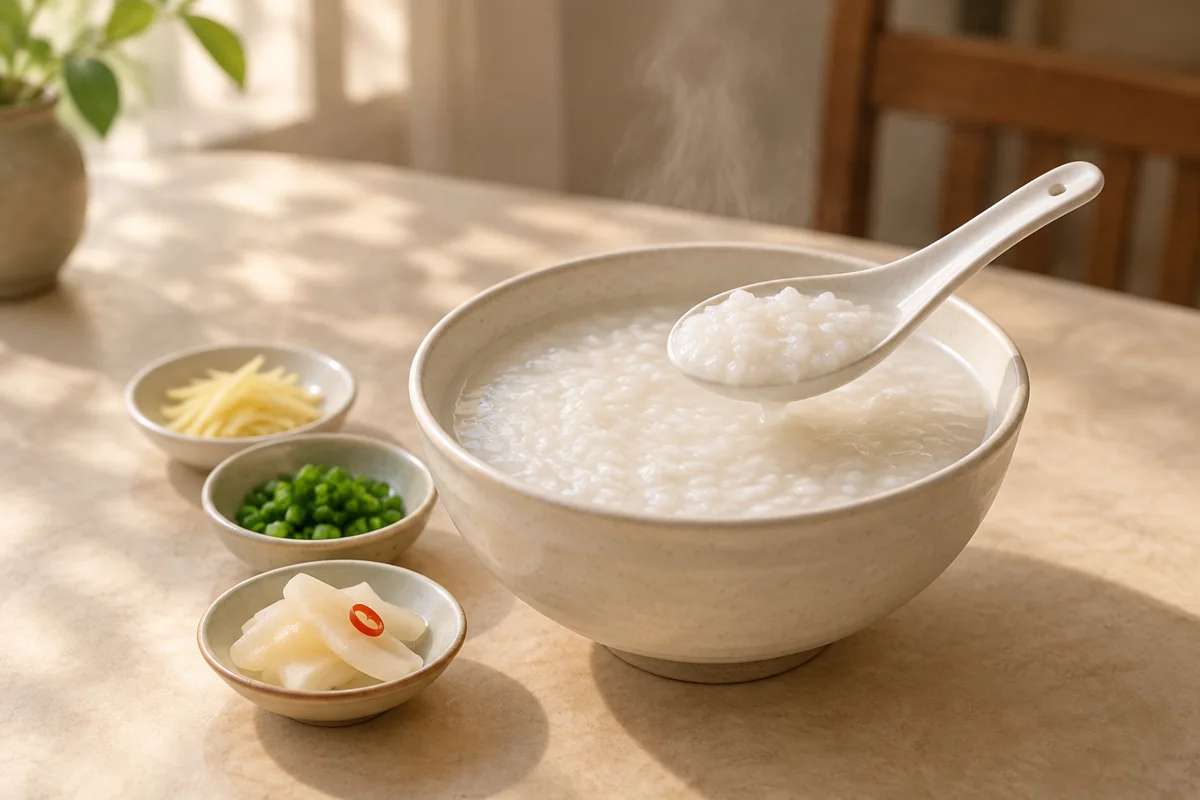
Plain congee begins with rice and abundant water, simmered until the grains soften into a spoonable porridge. This version keeps the base simple and leaves texture, seasoning, and toppings open to the cook.
Start with a ratio, finish by texture
The rice and water quantities here follow a 1:8 starting ratio by volume. It is not a universal standard. Rice variety, pot width, heat, evaporation, and how far the grains break down all change the finished bowl.
Allow roughly 55 minutes overall: about 5 minutes for preparation, a few minutes to bring 1.9 L (8 US cups) of water to a boil, then about 35–40 minutes of gentle simmering.
Allow about 35–40 minutes for the gentle simmer, then use the texture in the pot as your guide. Stir more often toward the end, when sticking is more likely. Hot water loosens congee that has become too thick; further simmering reduces a thinner pot. Resting off the heat will also thicken it.
Food safety and leftovers
Refrigerate cooked congee within 2 hours, or within 1 hour when the surrounding temperature is above 90°F (32°C). Divide a large pot into shallow containers and refrigerate at 40°F (4°C) or below. Small portions can go into the refrigerator while still warm; room-temperature overnight storage is not a safe alternative.
Use refrigerated congee within 3–4 days. Reheat it to 165°F (74°C), adding a little water and stirring to manage thickening and distribute heat. If using a microwave, cover the container, stir or rotate the food, and allow standing time so cooler spots can equalize before checking the temperature.
Seasonal context
“Early winter” is an editorial season label, not a description of conditions where every reader lives. We use solar terms as cultural markers for talking about food and routines, not as a cooking timetable. This congee can suit a slow morning or shared meal in cooler weather, but it can be cooked in any season or climate. Let your own weather, schedule, and table determine the right occasion for you.
Everyday food culture
Congee can appear at breakfast, lunch, dinner, or snack time, either on its own or with other dishes. Its names and preferred thickness vary across China, and toppings can change the same plain base. For a family meal, this recipe keeps seasoning and toppings at the table so each person can adjust a bowl. That is one practical serving approach, not a claim that every Chinese household prepares or eats congee in the same way.
Ingredients
Method
Prepare the rice and water
Rinse the rice briefly under cool water and drain it well. Bring 1.9 L (8 US cups) water to a boil in a heavy-bottomed pot.
Add the rice to boiling water
Stir the rice into the boiling water once so the grains do not settle into a clump.
Simmer gently
Lower the heat to maintain a gentle simmer. Leave the lid slightly ajar and cook for about 35–40 minutes, stirring occasionally and more often near the end to prevent sticking.
Adjust the texture
Stir in hot water if the congee is thicker than you like. If it is too thin, continue simmering gently while stirring. Keep in mind that congee thickens as it rests and cools.
Serve
Spoon the congee into bowls and add any toppings at the table. Keep salty additions optional and let each eater season their own bowl.
Adjust to taste
- Thinner texture: Add hot water a little at a time, stirring between additions until the congee reaches the consistency you like.
- Thicker texture: Simmer a little longer with more frequent stirring, or let the pot stand off the heat before serving.
- Richer flavor: Replace part of the water with unsalted or lower-sodium chicken or vegetable stock, and taste before adding salty toppings.
- Different rice: Jasmine rice brings a different aroma and texture. Do not treat glutinous or brown rice as equal-volume swaps; their water and timing needs differ.
- Available toppings: Choose a little scallion, ginger, sesame oil, soy sauce, cooked mushrooms, tofu, or cooked chicken according to taste and availability.