Journal
Why Do Chinese Eat Soup for Breakfast?
Congee, noodle soup, and soy milk with fried dough show how Chinese breakfasts vary by region — and why a hot morning meal became practical and familiar.
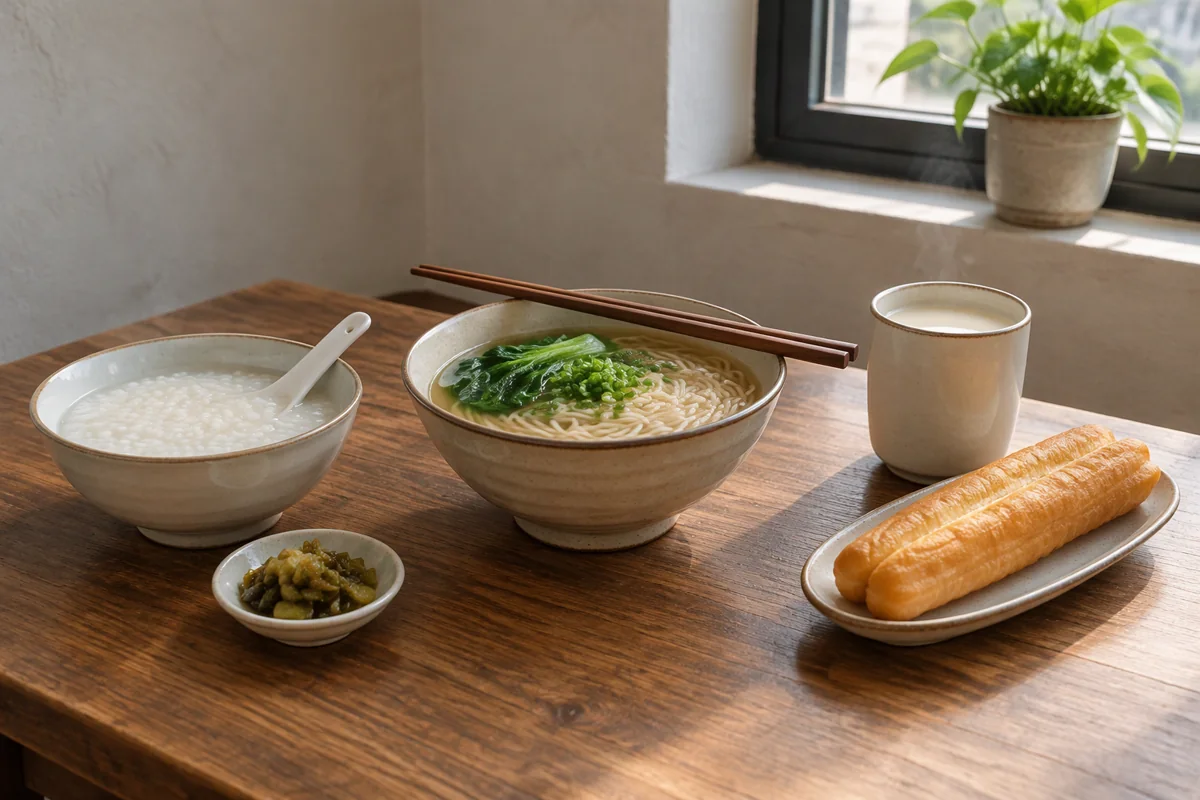
Breakfast in China can be a bowl of pale congee, noodles in broth, or soy milk beside a fried dough stick. It can also be a steamed bun eaten on the way to work. The familiar hot bowl is real, but it is one branch of a much larger breakfast map.
Soup Is a Category, Not One Breakfast
The question assumes a single custom where there are several. Congee is grain cooked in abundant water until it becomes porridge. Noodle soup keeps the noodles distinct in a seasoned broth. Soy milk is a drink, often served hot alongside something crisp or bready. Calling all three “soup” is useful only if the word means a warm, spoonable breakfast.
Even then, there are plenty of exceptions. Steamed buns, stuffed flatbreads, rice rolls, tea eggs, and griddle-cooked pancakes are everyday options in different places. Wuhan’s famous hot dry noodles come without a soup base. A breakfast stall may sell both a liquid and a solid item precisely because customers combine them.
The better question is why hot, freshly assembled bowls occupy such a visible place. The answer begins with grain, water, and the economics of cooking for a family or a morning crowd.
Congee Stretches Rice into Breakfast
Basic congee asks for rice, water, and time. Simmering breaks the grains down and turns a small amount of rice into a bowl with a soft, fluid texture. The cook can stop while some grains remain whole or continue toward a smoother consistency. There is no single correct thickness across households.
The plain base makes the rest of the meal flexible. Pickled vegetables, peanuts, scallions, preserved egg, fish, or shredded meat can be added in small amounts, depending on region and what is already in the kitchen. Cantonese congee shops are known for long lists of additions; a home breakfast may involve nothing more than rice and yesterday’s side dishes.
Leftover rice can also be given a second use in a morning pot. That matters in a food culture where throwing away cooked grain feels wasteful. The method is economical without requiring the meal to feel like a compromise.
For a closer look at the pot itself, our guide to everyday congee covers the basic rice-and-water method. Here, the important point is social: one mild base can accommodate several tastes at the same table.
Congee is less a fixed recipe than a way of making rice, water, time, and leftovers meet in the same bowl.
Noodles and Soy Milk Follow Regional Logic
Where wheat is a familiar staple, noodle soup is an obvious breakfast candidate. A bowl can be built quickly from noodles, broth, and a few toppings. Regional versions vary widely in noodle shape, broth, and seasoning; beef noodle soup in one place and a light bowl with greens in another do not represent one national recipe.
Rice-growing regions have their own noodle traditions, including rice noodles served in broth. This is a reminder that the common north-wheat, south-rice distinction describes a tendency, not a border that breakfast foods cannot cross. Migration, restaurants, and supermarket supply chains have carried local bowls far from their places of origin.
Soy milk with youtiao, a long fried dough stick, offers another arrangement. The drink is hot and mild; the dough is crisp and rich. Pieces can be dipped before eating, so the contrast happens at the table rather than inside one pot. The pairing shows that “soup for breakfast” is often shorthand for a hot liquid alongside a solid food.
Why a Hot Morning Meal Became Ordinary
A hot breakfast fits both domestic and commercial kitchens. At home, a single burner and one pot can produce servings for several people. Water expands the volume of grain, broth brings ingredients together, and residual heat keeps a bowl warm while the family assembles. These are practical advantages, especially where fuel, time, or ingredients were once tightly budgeted.
Outside the home, specialization makes breakfast fast. A vendor can prepare one broth, one pot of congee, or one batch of soy milk before dawn, then finish each order in seconds. Customers get a freshly cooked meal without owning a large kitchen or allowing time for a full family breakfast. Dense streets and morning foot traffic support that exchange.
Temperature carries cultural meaning too. Boiled water became tied to safe household practice, and hot drinks remain readily available in many public settings. A traditional vocabulary of warming and cooling adds another reason to prefer a warm start. That vocabulary explains familiarity and comfort; it does not turn breakfast into a remedy.
The bowl also encourages a brief pause. Noodles or congee straight from the pot ask to be eaten at the stall or table, while a bun can disappear one-handed during a commute. Both formats coexist because real mornings demand different speeds.
What Breakfast Looks Like Now
Contemporary breakfasts resist a tidy traditional-versus-modern divide. Someone may buy congee through a delivery app, drink packaged soy milk at room temperature, or have coffee with a steamed bun. Refrigeration, convenience stores, and changing work schedules have expanded the choices without removing the older ones.
Regional identity remains visible, but families do not owe allegiance to a single menu. A northern household can enjoy rice porridge, and a southern office worker can choose wheat noodles. Children may prefer one format while their grandparents prefer another.
So the shortest answer is that many people do not eat soup for breakfast, and those who do are usually eating something more specific: congee, noodles, or a hot soy-milk pairing. Its staying power comes from affordable ingredients, efficient cooking, familiar flavors, and the simple pleasure of beginning with something warm.